The Chesapeake
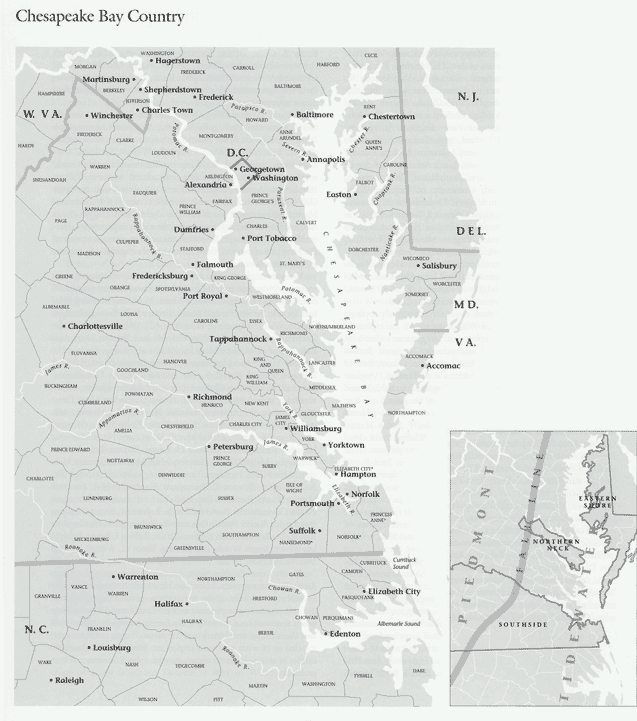
The area known as the Chesapeake encompasses eastern Maryland, eastern Virginia, and northeastern North Carolina. Popular conceptions of Chesapeake history typically center around romanticized images of life on the “old plantation.” The real story of the region, however, is far more arresting than the “moonlight and magnolias” version.
Essential to the development of the region was the Chesapeake Bay itself, a two-hundred-mile-long waterway fed by many navigable estuaries. Seventeenth-century European immigrants first colonized the Bay in 1607, rapidly settling the highly fertile lands. They soon turned to the production of tobacco. The tobacco economy was initially powered by indentured British servants. Eventually, it came to depend on the labor of enslaved African-Americans who expected to spend the rest of their lives toiling for others with no hope of freedom.
The agrarian nature of Chesapeake agriculture resulted in the development of few towns of any size, while the constant search for new arable lands reenforced the rural character of the region. During the seventeenth century, most Chesapeake residents led modest lives, as evidenced by their widespread building of impermanent, earthfast wooden houses.
Prosperity steadily increased through the eighteenth century as changing demographic and economic conditions brought improved living standards to many. As mortality rates declined, the earthfast houses of the previous century gave way to more permanent buildings. A gradual shift from tobacco to grain production meant there was less need to reinvest in labor and land. This allowed Chesapeake residents to acquire an increasing range of fashionable furnishings and consumer goods.
The same period witnessed a significant growth in the number and size of urban centers. The population continued to move westward, so market towns sprang up along the fall line to serve as places of transshipment to the larger coastal ports. By 1750, the region supported fifteen towns with estimated populations of five hundred or more; by 1780, the number had more than doubled. While the Chesapeake was still overwhelmingly rural, new patterns of trade, government, and commerce encouraged the transfer of power from the countryside to the city.
With the growth of urban centers came a dramatic upswing in the domestic production of household goods, including furniture. As early as the 1720s, numbers of English, Scottish, and Irish cabinetmakers immigrated directly to growing towns like Annapolis, Maryland, and Williamsburg and Norfolk, Virginia. These artisans reinforced the Chesapeake preference for British taste in cabinet wares, as did the continued regional importation of sophisticated furniture from British cities.
Chesapeake furniture unmistakably echoes the region's British cultural character in construction and style. Unifying similarities include the widespread preference for restrained exterior ornamentation in emulation of the British neat and plain style, and sound construction techniques unmatched elsewhere in early America. British influences on Chesapeake cabinetmakers waned only after the Revolution, when exported northern furniture and immigrant northern cabinetmakers began to arrive in southern coastal cities in large numbers.


