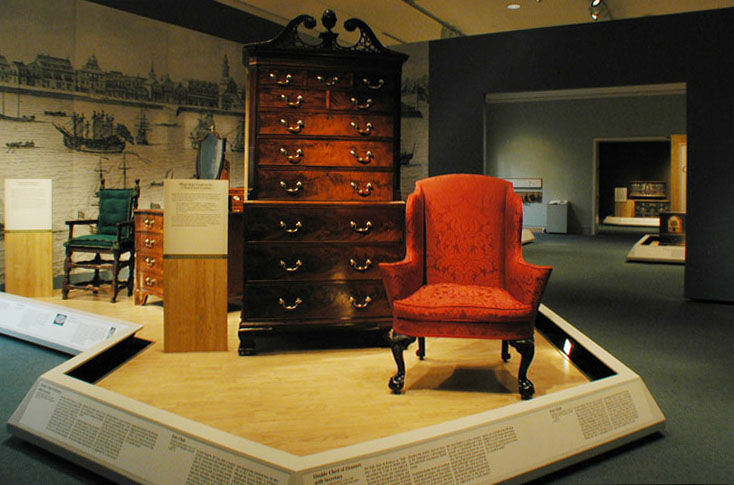


High-Style Goods in the Colonial Low Country
While some wealthy Charlestonians preferred furniture in the neat and plain taste, others opted for the sort of rich ornamentation found on the best urban British wares. In 1773, New England lawyer Josiah Quincy observed of Charleston:
“State, magnificence and ostentation, . . . are conspicuous among this people. . . . In grandeur, splendour of buildings, decorations, . . . and indeed in almost everything, [Charleston] far surpasses all I ever saw, or ever expected to see, in America!”
Echoing those sentiments, Eliza Lucas Pinckney observed that the people of colonial Charleston “live very Gentilie and very much in the English Taste.”
The preference for opulent, British-inspired fashions is evident in Charleston buildings, including the Miles Brewton House, built in 1769 by a highly skilled crew of immigrant British joiners and carvers. Many local furniture wares similarly display the aspiring taste of Charlestonians. In addition to the strong influence of ornately carved imported British furniture and sophisticated British design books, notably Chippendale's Gentleman and Cabinet Maker's Director, lofty British furniture fashions arrived directly through the immigration of talented artisans such as Abraham Pearce, John Lord, and Thomas Woodin, whose Charleston newspaper advertisements repeatedly allude to their London training.