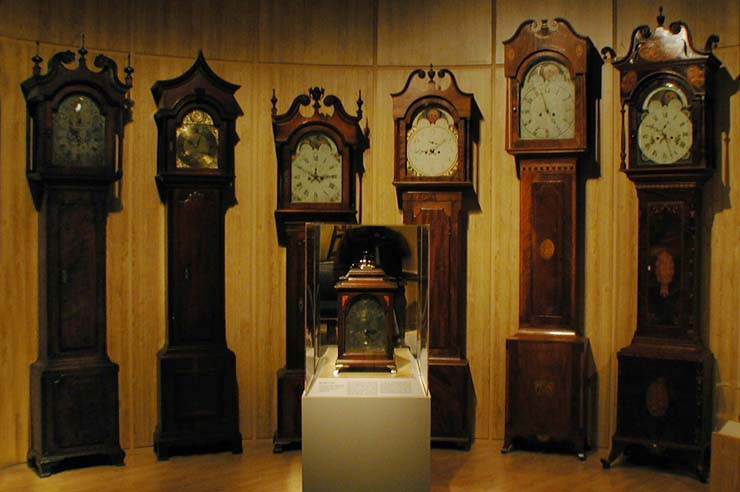
Southern Clocks
Few Americans owned clocks in the seventeenth century. Those who did often had trouble keeping them running, because of to a shortage of artisans who could repair them. When timepieces did appear in the earliest southern estate appraisals, they frequently were described as “not goeing” (1671), “Much Out of Order” (1701), or “out of kelter” (1701). By the mid-eighteenth century, ownership of clocks in the South was on the rise, a reflection of the growing presence of clock- and watchmakers.
Clocks appeared in private spaces in the home, such as bedchambers and libraries, and in public areas, including parlors, passages, and dining rooms. Clocks also were used in public buildings, including taverns, where they could be seen and heard by everyone.
Clockmaking was slow to develop in most of the coastal South, largely due to regular importation of fashionable British clocks and watches. However, Fredericksburg, Virginia, emerged as a major southern production center because of its metalworking trade. In the backcountry, Germanic and British makers alike found ready customers. The clocks shown here and in other parts of this exhibit illustrate important clockmaking traditions in both regions.


